

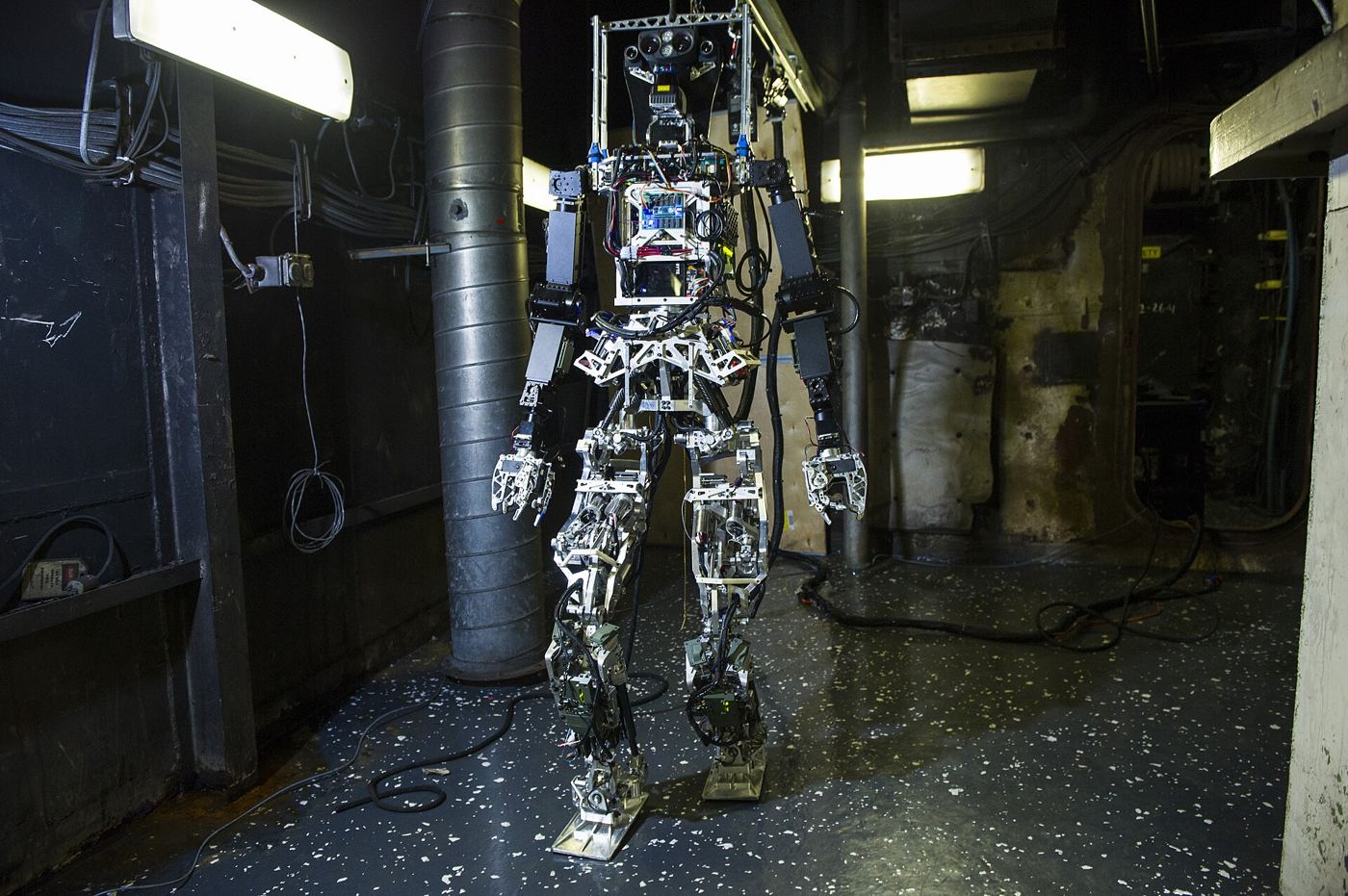
Humanoid robots are learning a skill humans take for granted, which is recovering balance after an unexpected push without falling over. In laboratory trials, engineers nudge machines sideways, tilt the floor beneath them and slide obstacles into their path while motion capture cameras record every adjustment. The newest systems react in fractions of a second, shifting weight, widening their stance and taking a quick corrective step rather than stiffening and toppling. Researchers say balance recovery matters more than walking speed, because a robot that cannot survive a bump cannot safely share pavements, warehouses or hospital corridors with people. Force sensors in the feet measure pressure changes dozens of times per second, feeding a controller that predicts where the body will land if nothing changes. When the prediction looks unsafe, the robot plans a step to a safer position and swings its arms to steady the turn. The approach borrows from biomechanics studies of athletes and elderly people, whose recovery steps follow surprisingly consistent patterns. Teams stress that the machines remain clumsy compared with a child, yet the gap is narrowing as actuators become faster and lighter. Each trial is logged, scored and repeated until the same recovery works reliably across different surfaces and lighting.
What the Evidence Shows
The next stage moves robots out of padded laboratories and onto surfaces that behave less predictably, including wet tiles, loose gravel and ramps with uneven edges. Engineers are also teaching machines to protect themselves during an unavoidable fall, tucking arms and rolling slightly to reduce damage to joints and sensors. That matters commercially, because a single hard fall can break components costing thousands and erase confidence among buyers considering robots for public spaces. Another focus is transparency, so bystanders can read what the robot intends to do next from its posture and movement, rather than being startled by a sudden lunge. Trials now include volunteers walking naturally around the machines, forcing the software to distinguish a harmless near miss from a genuine collision risk. Developers say useful humanoid robots will appear first in controlled settings such as logistics depots and rehabilitation gyms, where balance demands are real but routes are predictable. Critics caution that impressive demonstrations can hide narrow conditions, and they want published failure rates alongside success videos. The laboratories agree, increasingly releasing full trial data including falls. Steady, honest progress on balance, they argue, is what will eventually let two legged machines earn a place beside people. Reporting and analysis from sources such as IEEE Spectrum track the same developments, and specialists following humanoid robot balance recovery say the direction is now consistent across independent lines of evidence.
The Wider Context
Adoption of humanoid robot balance recovery follows a familiar pattern with an unfamiliar speed. Early users tolerate rough edges in exchange for advantage, mainstream users arrive when the tool disappears into existing workflows, and the market consolidates around whoever made that transition feel effortless. Vendors are racing less on raw performance now than on integration, support and trust.
What Happens Next
The realistic forecast for humanoid robot balance recovery is steady integration rather than sudden replacement: embedded in products people already use, improving in increments, and regulated in proportion to its reach. The companies and institutions that plan on that basis, training staff and redesigning processes instead of chasing launches, are the ones the adoption data tends to vindicate. You can follow related developments in our coverage of technology.
It is also worth remembering how quickly the picture in this area has changed before. Positions that looked settled a few years ago have been revised as new data arrived, and the same humility is appropriate now. The strongest coverage of this subject, and the most useful advice, tends to come from sources that update their views openly when the facts move, rather than defending an earlier position long after it has stopped fitting the evidence available.
